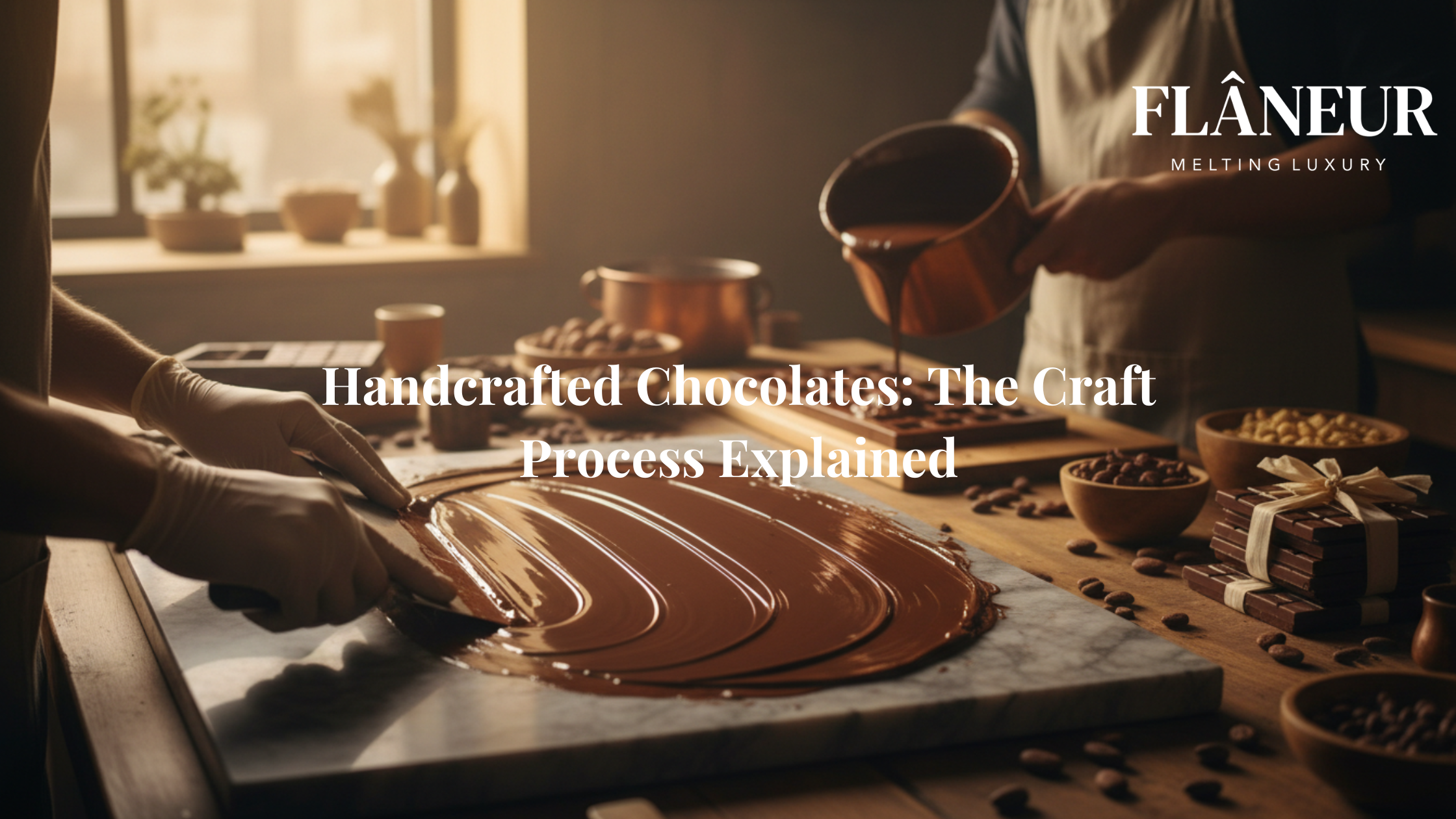
Handcrafted chocolates transforms raw cocoa beans into refined luxury bars through a detailed artisan process. From fermentation and roasting to tempering and molding, each step shapes flavor, texture, and quality. Understanding how handcrafted chocolates are made helps chocolate lovers appreciate why premium bars taste richer and more complex than mass-produced alternatives.
Handcrafted Chocolates begins long before the glossy bar reaches your hands. It starts with cocoa beans drying under tropical sun, farmers turning them carefully so flavour develops evenly.
We often say chocolate is part agriculture, part science, part quiet obsession. Spend time in a craft chocolate workshop and you’ll see what we mean. Thermometers appear everywhere, cocoa aromas fill the air, and someone is always tasting something.
The journey from bean to bar explains why handcrafted chocolates feel different. The flavour is layered. The texture snaps cleanly. The story behind it is real.
Let’s walk through how this craft actually happens.
Handcrafted Chocolates Begins at the Cocoa Bean Source
Every great handcrafted chocolate bar starts with one simple decision: choosing the right cocoa beans.
Artisan chocolate makers rarely buy anonymous bulk cocoa. Instead, they work with specific farms or regions where beans carry distinct flavour profiles.
Popular cocoa origins used in Handcrafted Chocolate:
- Ecuador: floral notes with mild fruitiness
- Madagascar: bright citrus acidity
- Peru: nutty depth with cocoa intensity
- Ghana: classic chocolate richness
In 2026, premium chocolate makers increasingly highlight single-origin beans, similar to specialty coffee. Buyers now want to know where the cocoa grew and how it was harvested.
This attention to origin gives handcrafted chocolate its signature personality.
Handcrafted Chocolates Crafting: Roasting, Grinding, and Refining
Once beans arrive at the chocolate studio, the real craft begins. Chocolate production happens in smaller batches, allowing precise control over flavour.
Here are the core steps artisans follow:
1. Roasting the Cocoa Beans
Roasting develops aroma and removes moisture.
- Temperature and timing vary by bean origin
- Too little roasting leaves bitterness
- Too much destroys delicate notes
Think of roasting like tuning an instrument. A few degrees change everything.
2. Cracking and Winnowing
After roasting, shells are removed. What remains are cocoa nibs.
These nibs contain cocoa solids and cocoa butter, the foundation of handcrafted chocolate.
3. Grinding Into Chocolate Liquor
Nibs enter stone grinders or melangers where they slowly transform into liquid chocolate.
Grinding releases cocoa butter and creates a silky paste called chocolate liquor.
4. Conching and Refining
Conching smooths texture and balances flavour.
For many Chocolate makers, this step runs for 24 to 72 hours.
Patience here creates the velvety finish people associate with luxury chocolate.
Handcrafted Chocolates Tempering: The Science Behind the Perfect Snap
Tempering might be the most delicate stage in handcrafted chocolate making.
Chocolate contains cocoa butter crystals. If those crystals form incorrectly, the bar turns dull and crumbly. Tempering controls temperature so crystals align perfectly.
The tempering process usually includes:
- Heating chocolate to melt crystals
- Cooling it slowly
- Reheating slightly to stabilize structure
When done right, the Chocolate gains:
- A glossy finish
- A firm snap when broken
- A smooth melt on the tongue
Watch a chocolatier temper chocolate and you’ll see calm concentration. It’s part chemistry, part choreography.
Why Chocolate Lovers Choose Handcrafted Chocolates
Premium buyers increasingly gravitate toward Handcrafted Chocolates for reasons that go beyond taste.
Key motivations include:
- Craftsmanship – each batch reflects a maker’s skill
- Transparency – sourcing and production are clearer
- Unique flavor experiences – each origin tells a different story
- Luxury gifting appeal – artisan bars feel thoughtful and curated
In fact, specialty chocolate sales globally grew nearly 14% in 2025, driven largely by consumers seeking higher quality treats.
For us, the appeal is simple. When chocolate carries human touch at every step, it feels personal.
The Craft Behind Every Handcrafted Chocolate Bar
Handcrafted Chocolates are patience turned into flavor.
From cocoa bean farms to careful roasting, slow grinding and precise tempering, each step shapes the final bar. The result is chocolate that carries nuance, character, and craft.
Next time you break a square of handcrafted chocolate, pause for a moment. Notice the snap. Let it melt slowly.
That small moment holds months of work and a remarkable journey from bean to bar.
And honestly, that makes every bite feel just a little more special.
With Flaneur, luxury chocolate is reimagined as a mindful indulgence rather than just a sweet treat. Crafted in small batches using premium cocoa and carefully chosen natural ingredients, Flaneur offers a thoughtfully curated range of chocolates designed for slow enjoyment and meaningful moments. From rich dark chocolates to balanced milk and flavour-led creations, each bar reflects a commitment to quality, craftsmanship, and refined taste.
By focusing on ethical sourcing, elegant presentation, and carefully developed flavour profiles, Flaneur brings a premium chocolate experience that feels intentional, contemporary, and rooted in conscious luxury.